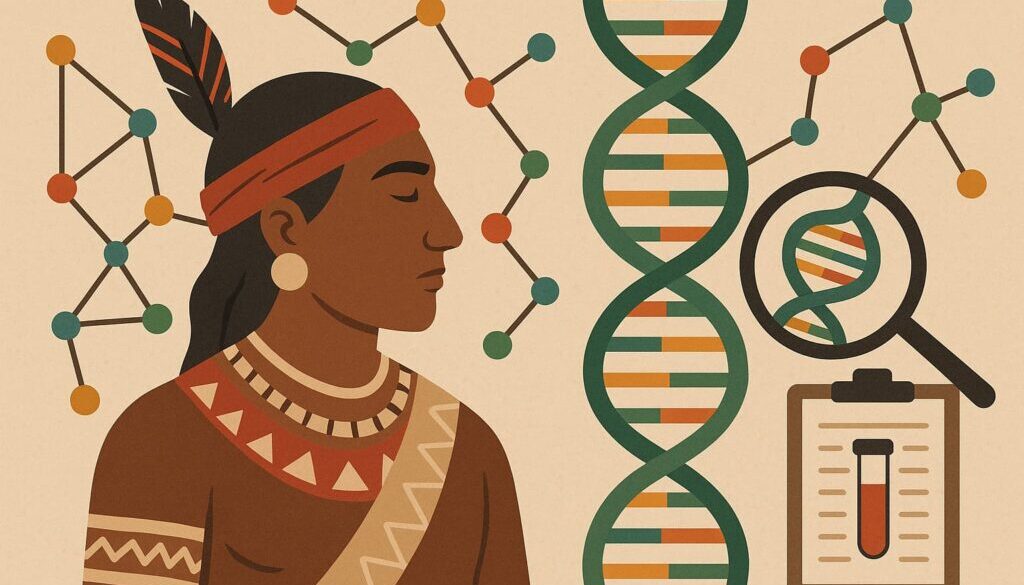
What exactly is the Tribal Genome Project, Gujarat?
-
First state‑run tribal WGS initiative. Launched in July 2025 by the Gujarat Biotechnology Research Centre (GBRC) and the Tribal Development Department, the scheme will collect ≈4,158 blood samples from 20+ tribes across 17 districts and generate ~2,000 whole‑genome sequences (WGS). Sampling includes “genetic trios” (both parents + one child) to track inheritance.
-
Why?
Fill the data gap: existing national efforts such as the 10,000‑genome GenomeIndia project pooled Indians in general, but tribal groups—8 % of India’s population—are still under‑represented.
Precision public health: high rates of anaemia, sickle‑cell disease and infant mortality in tribal belts need variant‑specific diagnostics and drug dosing.
Heritage science: unique lineages (e.g., the Sidi of African descent) can illuminate ancient migrations.
-
Ethics guard‑rails. The protocol follows ICMR’s National Ethical Guidelines—written consent in local languages, gender parity in sampling, and community briefings before data sharing or publication.
Static Foundations You Must Know
A. Human‑Genome Architecture
Chromosomes → Genes → DNA letters. Humans pack ~3 billion base‑pairs (A,T,G,C) into 23 chromosome pairs. A gene is a coding stretch that makes a functional RNA/protein. A single‑nucleotide polymorphism (SNP) is a single‑letter change that varies among people (≈1 in every 1,000 bases). A haplotype is a cluster of SNPs that tends to be inherited together—think of it as a “genetic sentence” you receive intact from one parent. These blocks help trace ancestry and disease risks.
B. Population Genetics – Founder Effect & Genetic Drift
Picture a few families founding an isolated village. The founder effect locks in whatever gene variants those few carried—rare alleles may become common just by chance. Genetic drift is this random fluctuation carried forward generation after generation, strongest in small, isolated groups (many tribal communities), gradually shaping their gene pool independent of natural selection.
C. Monogenic Disorders Spotlight
Sickle‑cell disease (SCD). A single A→T switch in the β‑globin gene swaps glutamic acid for valine, making haemoglobin molecules stick together when oxygen is low; red cells distort into “sickles”, causing pain crises, anaemia and organ damage. Thalassaemia. Here, whole sections of the α‑ or β‑globin genes are deleted or mutated, cutting haemoglobin production. The body tries to compensate with rapid but ineffective red‑cell turnover, leading to severe anaemia that often requires lifelong transfusions. Both disorders are common in Indian tribal belts—hence the project’s focus.
D. Next‑Generation Sequencing (NGS) & Reference Genomes
Workflow in four bites: 1. DNA extraction (blood sample → pure DNA). 2. Library prep (DNA chopped into small fragments and bar‑coded). 3. Sequencing (millions of fragments read in parallel on an Illumina or similar platform). 4. Data analysis (software aligns reads to the current human reference build GRCh38/hg38, flags variants, and stores them in secure databases). The Gujarat project will eventually create tribe‑specific reference panels—useful for more accurate variant calling in those populations.
E. Bio‑Ethics: Informed Consent, Privacy, Community Engagement
Informed consent means individuals (and often village councils) must understand purpose, risks, future data use, and their right to withdraw. Privacy & data security demand de‑identification, restricted access committees, and compliance with Biotech‑PRIDE & forthcoming Digital Personal Data Protection rules. Community engagement involves co‑designing study aims, sharing plain‑language results, capacity‑building and ensuring benefits (like anaemia screening camps) flow back. Frameworks from ICMR 2017 Guidelines and global Indigenous genomics literature emphasise these steps.
Why this matters for UPSC
-
Prelims: expect factual MCQs—e.g., “What is a haplotype?” or “Which state launched the first tribal genome sequencing project?”
-
Mains GS III (Science & Tech): link how NGS + population genetics can enable precision medicine in marginalised groups, while highlighting ethical safeguards.
-
Essay / Interview: showcases the balance between scientific advancement and indigenous rights—excellent fodder for discussions on inclusive development.